


Skip to content
KuzhuHRMS Software

CRM
software for Indian businesses

A working CRM inside the same platform: leads captured and assigned, a pipeline that shows where every deal stands, quotations from your rate cards, and follow-ups that surface on the day they are due — for companies that would rather not buy a second system.

Available on:Enterprise

Why it exists

What crm looks like when it works.

A CRM inside your HRMS sounds odd until you run a services business: the same people who deliver the work sell the work, and leads deserve better than a founder’s inbox. Kuzhu’s CRM tracks leads and deals through a pipeline you define, with activities — calls, meetings, follow-ups — scheduled against each, and a “My Day” view that turns the pipeline into this morning’s call list.

Every lead carries its source, so the monthly question — which channel actually produces customers — has an answer with numbers. Deals carry value and stage; the funnel report shows conversion between stages and where momentum dies. Email templates with merge fields handle the follow-up notes that are 80% identical, without sounding like it.

Because it lives on the same platform, the boundary with delivery is clean: a deal won can become the customer that invoicing bills, and the team’s CRM activity sits in the same reporting world as everything else. For a small sales team, this is the difference between a CRM that gets updated and one that gets abandoned by March.

The outcome

“The sales team and the payroll run in one login, not two subscriptions.”

CRM software screenshots

See Kuzhu CRM software in action.

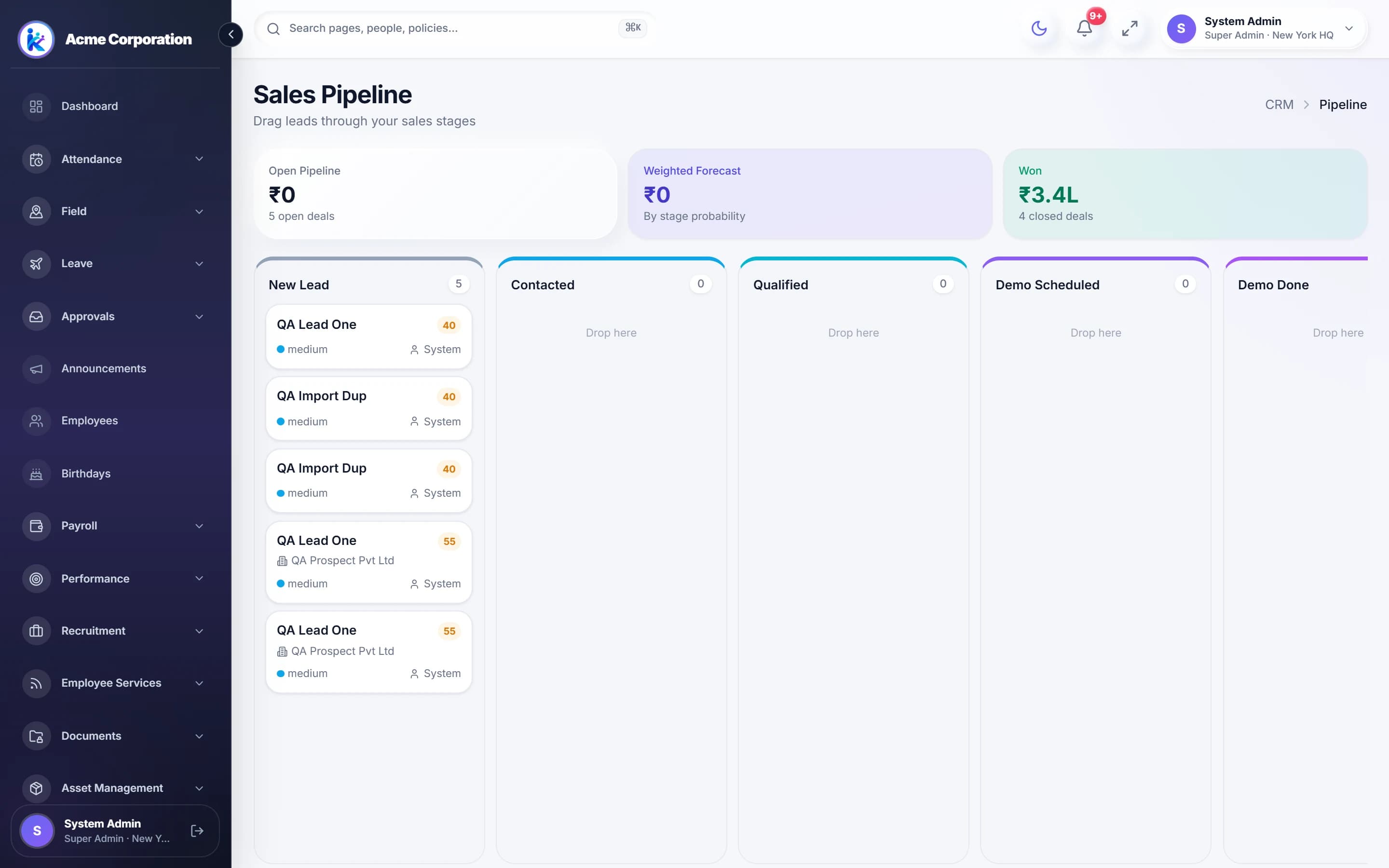
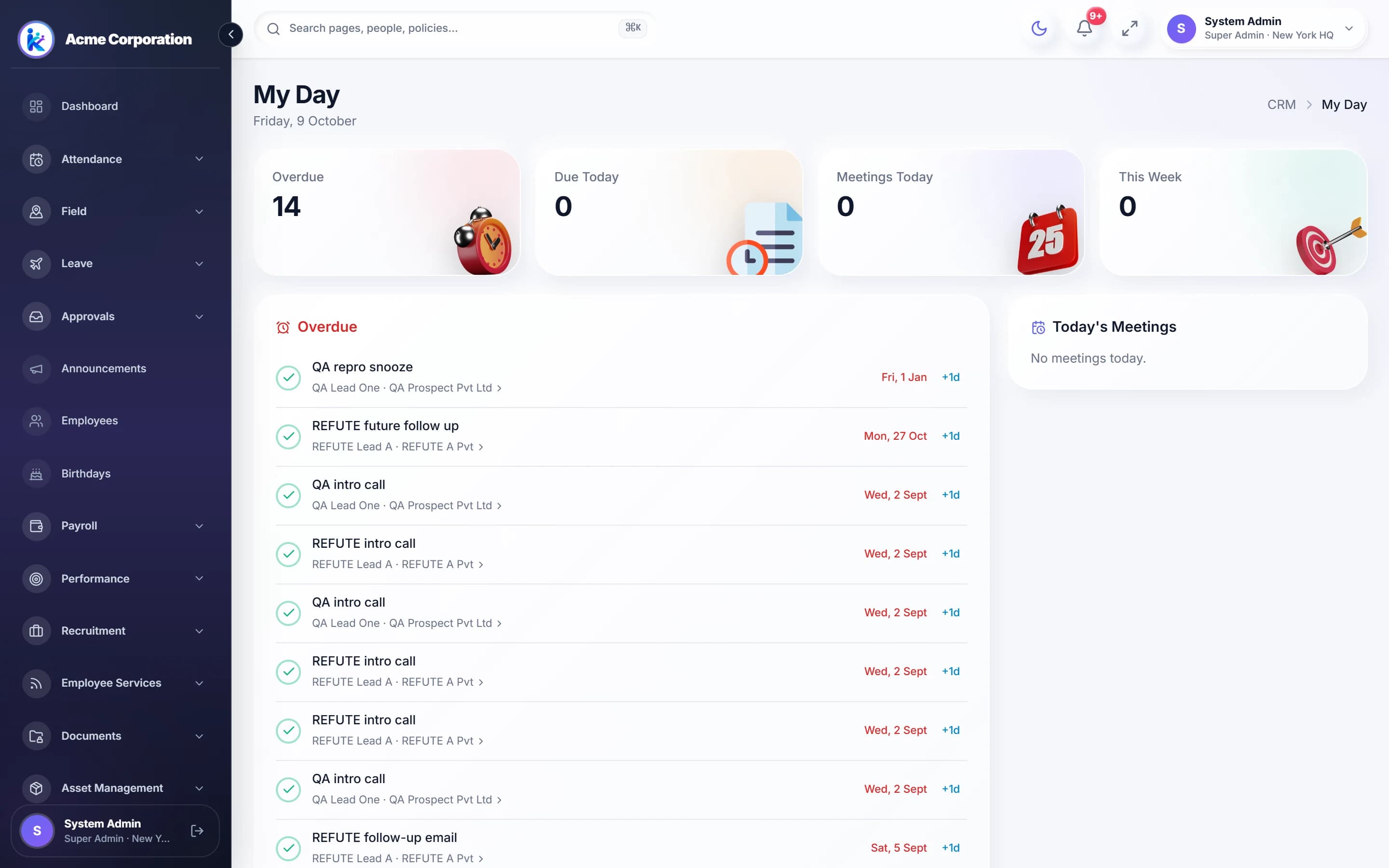
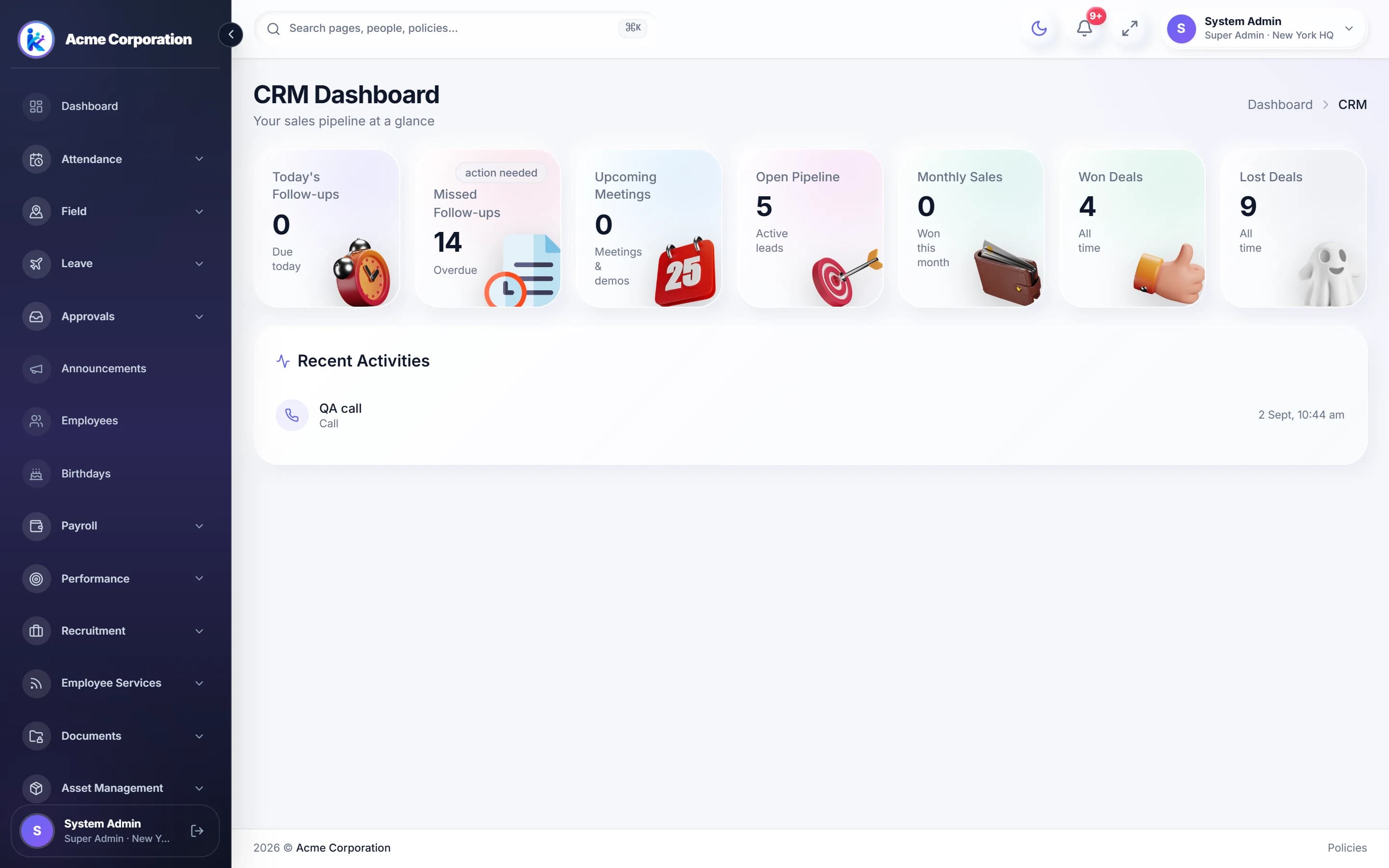
Real screenshots of the CRM your sales team works in: the sales pipeline, the daily follow-up list and the sales dashboard, on the same login as HR and payroll.

yourcompany.kuzhu.in/crm/pipeline
Kuzhu CRM software sales pipeline board with leads as cards in deal stages, open pipeline value, weighted forecast and won dealsKuzhu CRM My Day screen listing overdue sales follow-ups, calls due today and today’s meetings for a salespersonKuzhu CRM sales dashboard showing follow-ups due, missed follow-ups, upcoming meetings, open pipeline, monthly sales and won and lost deals
Every open deal as a card in its stage, dragged along as it moves. Open value, the weighted forecast and what has been won sit above the board.

Feature by feature

What crm does, specifically

Start

01

Lead capture and assignment with duplicate detection

02

Pipeline stages you define, with value and probability

03

Quotations and proposals from templates

Outcome

How it works

From set-up to running, in 5 steps.

Most teams have this live inside the first month — the workspace exists on day one, and week three is a parallel run against whatever you use today.

Step 01Implementation

Capture leads with sources

From forms, imports or manual entry — each tagged by where it came from, which powers the channel report later.

Next phase
Step 02Implementation

Qualify into deals

Leads worth pursuing become deals with value and expected close, moving through your pipeline stages.

Next phase
Step 03Implementation

Work the day, not the database

My Day lists today’s calls and overdue follow-ups. The pipeline is for review; the day view is for working.

Next phase
Step 04Implementation

Follow up without retyping

Email templates with merge fields, sent from the deal, logged against it automatically.

Next phase
Step 05Implementation

Read the funnel

Conversion by stage and source, pipeline value by month — the sales review builds itself.

Ready to run

Worth a closer look

The questions that usually decide the deal.

01Buyer question

The My Day discipline

The answer

CRMs die of neglect, not of missing features. My Day inverts the tool: instead of asking salespeople to browse a database, it hands them a finite list — follow-ups due today, overdue ones first, with one-tap logging of the outcome and the next step. Ten minutes at 9am keeps the entire pipeline honest, and managers see rescheduling patterns rather than silence.

02Buyer question

Source attribution that survives arguments

The answer

Every lead carries a source from first capture, and it travels through qualification to the won deal. Marketing spend meetings run on the conversion-by-source table instead of recollection. When the website form (which lands enquiries here automatically) outperforms the expensive listing, the numbers say so.

Questions

What buyers ask about crm.

Something else on your mind? +91 82093 73274 — a person answers, mon–sat, 10am–7pm ist.

Yes — stages are yours, with deals moving through them and conversion measured stage to stage.

Activities schedule against leads and deals; My Day lists what is due; outcomes log with a tap and set the next step.

Yes — form submissions arrive with their source and page attached, ready to work the same morning.

Yes — templates with merge fields for lead and deal data, sent from the record and logged against it.

Funnel conversion by stage and by source, pipeline value, activity volume per person, and win/loss over time.

KStart with your real workflow

Bring us the mess.
We'll show you what changes.

No polished slides. No imaginary employee data. Walk us through how your HR actually works today and see where Kuzhu can take the work off your team.

30 minutes · Your numbers · Your questions

What happens in the demo

01

Show us the current setup

Attendance, payroll, approvals — whatever is creating the most work.

02

We map it to Kuzhu

You see exactly how the workflows connect instead of hearing a feature list.

03

Decide if it fits

If Kuzhu is not the right answer, we will tell you.

A real conversation, not a sales script

Ready when you are.

Kuzhu HRMS