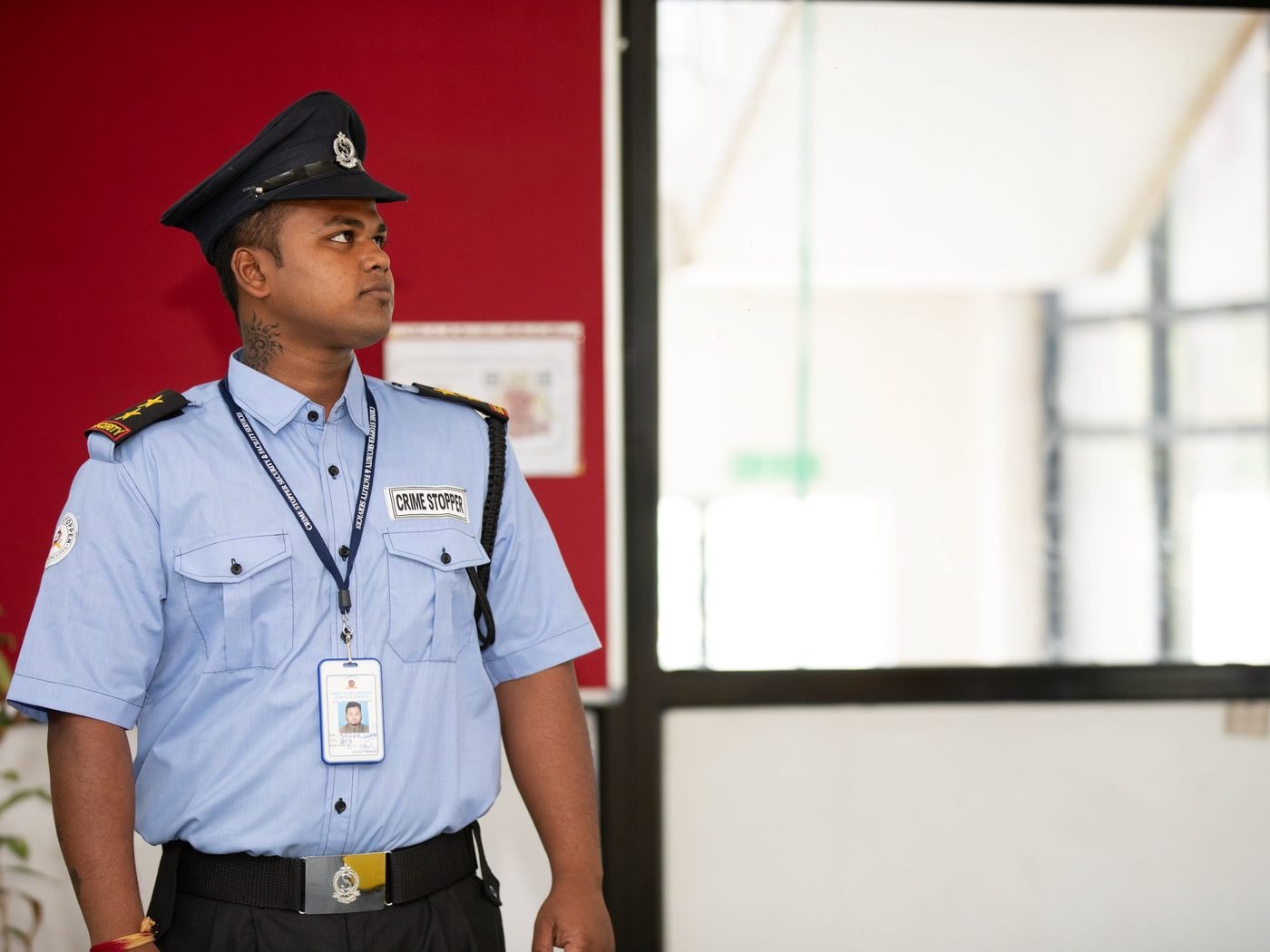
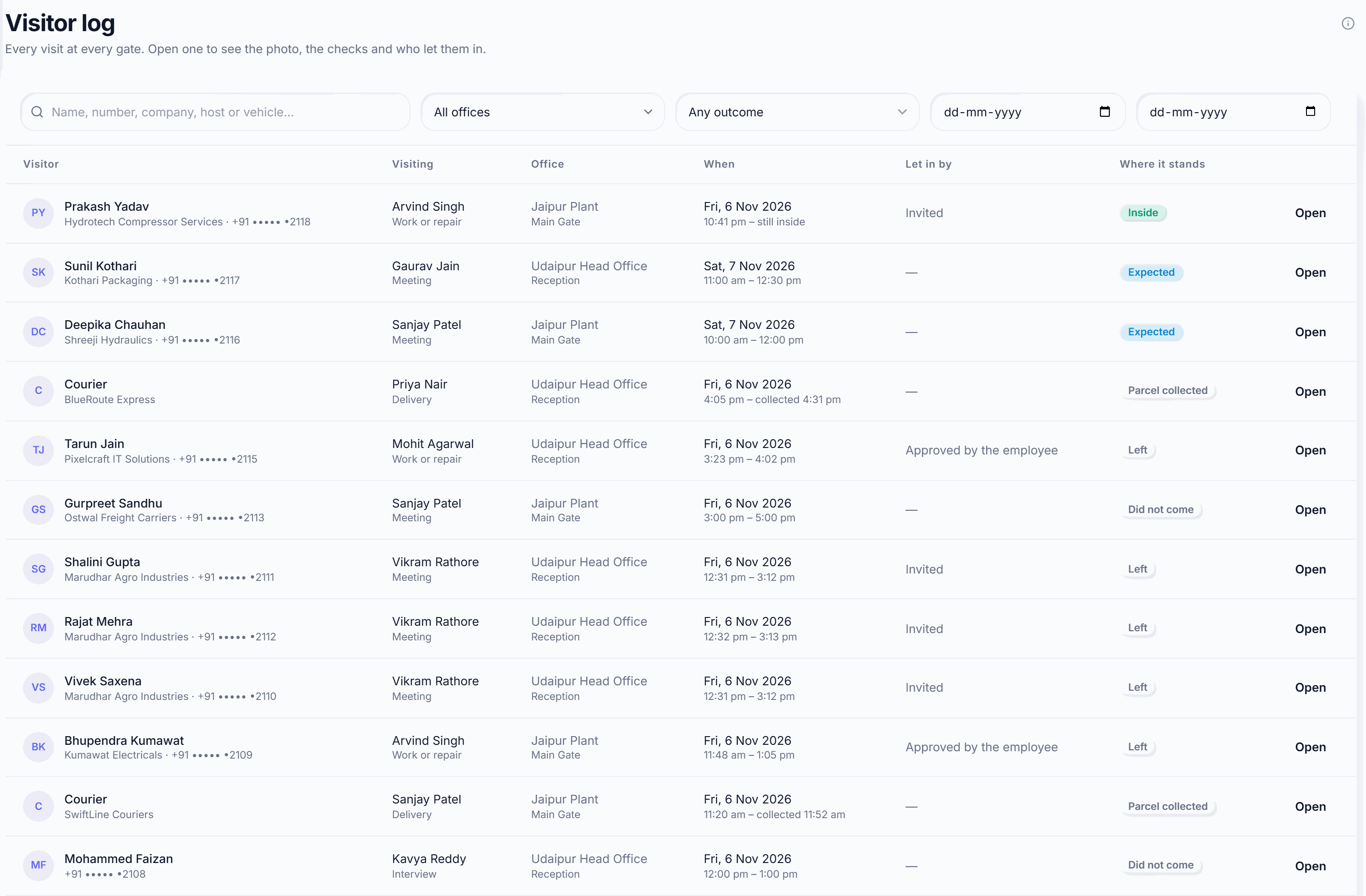
A paper visitor register at the gate records whatever name a visitor chooses to write. A visitor management system is meant to replace that with a record you can rely on: who came, who they came to meet, whether that person agreed to see them, when they went in and when they left. Kuzhu runs the gate on a company phone or tablet, so the guard needs no laptop and no login of their own, only a PIN for their shift.
Expected visitors arrive with a pass. The employee they are meeting invites them, Kuzhu issues a single-use QR pass, and the guard scans it at the gate. Walk-in visitors give their mobile number and have a live photo taken, and the employee they asked for gets a full-screen request on their phone to let them in or turn them away. If that person is on leave or does not answer, the request goes to a backup, so nobody waits at the gate while a message goes unread.
Because the gate is part of the HRMS, it knows things a standalone visitor app cannot: who is on leave today, who reports to whom, which employees exist at all, and which candidates are due for an interview. Contractor workers get a pass that works for the days and hours of their contract, once a day in and once out. Records are kept for a year and photos for ninety days by default, which matters under the Digital Personal Data Protection Act. The gate keeps working when the network drops, with today's expected visitors and signed passes held on the device.